
World Oceans Day 2022
The United Nations has designated 8th June as World Oceans Day, a day for humanity to celebrate the ocean. This year’s theme is ‘Revitalization: collective action for the ocean’, which aims to highlight the communities, ideas and solutions working together to protect the world’s oceans. At Hindawi, we welcome research on potential solutions to major issues, and as all our articles are Open Access, this means the research is freely accessible to everyone around the world.
---
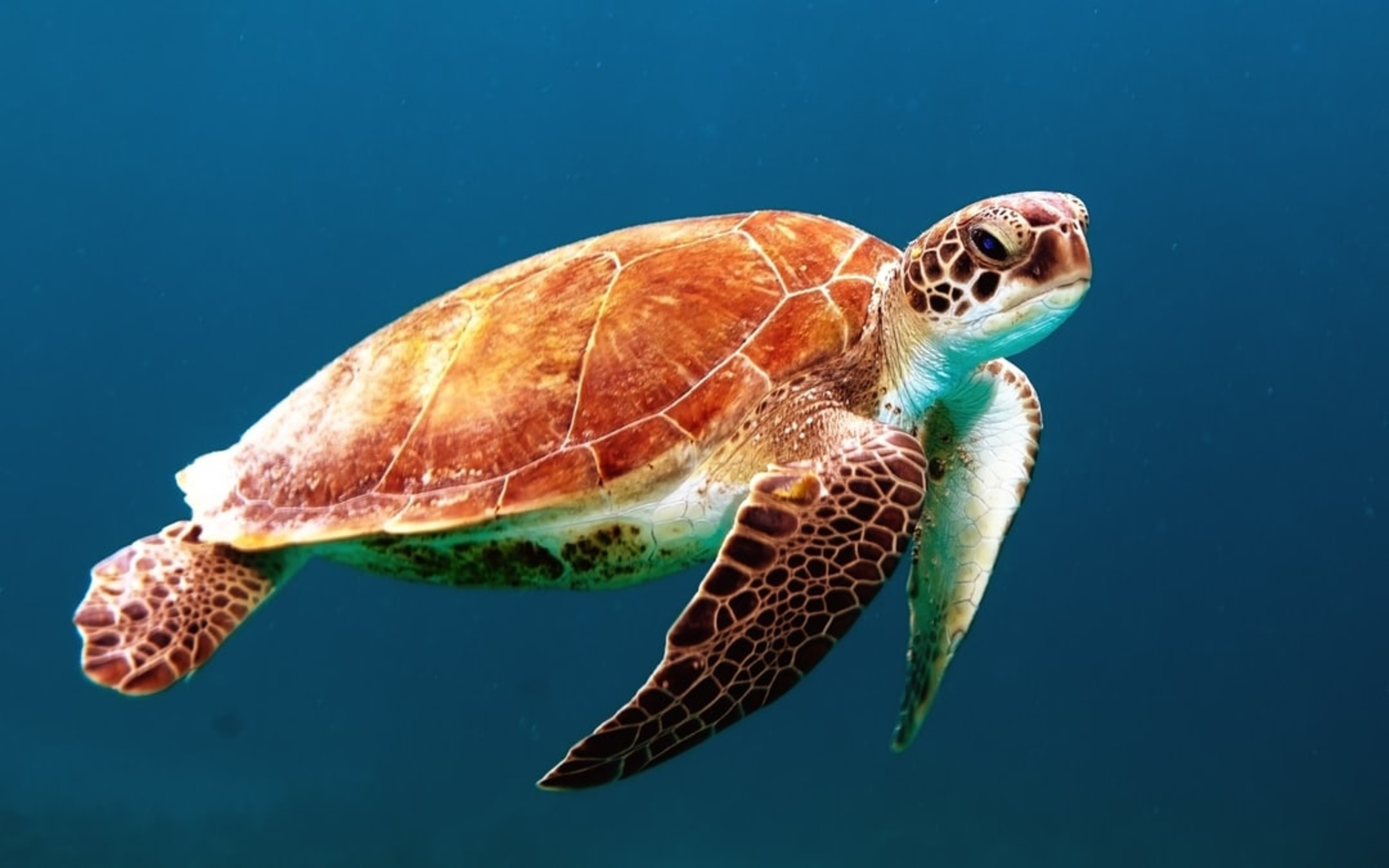
Alongside the climate crisis, litter and plastic pollution are some of the major threats to ocean life, and the focus of research around the world. Solving these problems requires cooperation not only across the globe, but also across scientific disciplines. An article in Mathematical Problems in Engineering that tests a Convolutional Neural Network to identify plastic bags and bottles shows us that it’s not just biologists worrying about the turtles! Read the full article: Faster R-CNN Algorithm for Detection of Plastic Garbage in the Ocean: A Case for Turtle Preservation
A study by Sudanese ecologists in International Journal of Ecology, on the other hand, emphasizes the importance of regional research, assessing the dynamics of beach litter at a UNESCO World Heritage Site and Marine National Park in the under-studied Red Sea region. Read the article to find out the authors’ suggestions for how to combat beach litter according to its source: Status of the Beach Litter in the UNESCO World Heritage Site of Dungonab and Mukkawar Island Marine National Park in Sudan, Red Sea
And pollution isn’t just physical litter—a team from California reviewed current literature on mercury pollution in San Francisco Bay Area and tracked methylmercury concentrations at different trophic levels. Read the full article in Journal of Environmental and Public Health to see the authors’ recommendations for reducing mercury pollution in the San Francisco Bay Area.
Another major problem facing those trying to save our oceans is that we simply don’t know enough about them—it is said that we know less about the ocean floor than we do about the surface of Mars. It is therefore vital that we learn more about assemblages of flora and fauna associated with the seafloor in order to protect them.
A study published in Journal of Marine Sciences assessed the impact of wave action and freshwater outflow on the spatial distribution and temporal stability of soft-bottom benthic macrofauna on the French Basque coast. The data obtained and analysis carried out by the team provides an applied perspective on coastal management and restoration: Hydrodynamic Conditions Effects on Soft-Bottom Subtidal Nearshore Benthic Community Structure and Distribution.
Meanwhile, another Atlantic study represents the first attempt to carry out broad-scale ecological research of seagrass beds in Morocco. An article published in International Journal of Zoology provides baseline data on the benthic fauna associated with Zostera noltei seagrass in order to better plan the conservation of the biodiversity contained within these seagrass beds.
---
It is only with the help of our editors that we are able to publish this research that works towards helping to protect our oceans. If you would like to join any more editorial boards, please complete our application form. Thank you to the Academic Editors of these papers: Parikshit Narendra Mahalle, Ram Chander Sihag, Maria R. Gualano, Garth L. Fletcher, Marco Cucco.
And don’t forget, our editors get a full waiver to publish in their journal, or 50% off the article processing charge on other journals as the corresponding author. Read more about the author guidelines for the journals mentioned above here:
International Journal of Zoology
International Journal of Ecology